

Yo, folks! As a supplier of NE Hoisting Chain, I often get asked if there are any international standards for this type of chain. Well, let's dive right in and explore this topic.
First off, what exactly is NE Hoisting Chain? It's a crucial component in many industrial applications, especially in the cement industry. This chain is designed to handle heavy loads and operate in tough environments. NE Hoisting Chain plays a vital role in conveyor systems, hoists, and other machinery that require reliable and strong lifting capabilities.
Now, onto the question of international standards. There are indeed some international and national standards that govern the design, manufacturing, and use of hoisting chains. One of the most well - known standards is EN 818. This European standard sets the requirements for chain slings made from generally - purpose steel chains. While it's mainly focused on chain slings, some aspects of it can be relevant to NE Hoisting Chain as well. It covers things like the chain's mechanical properties, dimensions, and testing methods.
Another important standard is ISO 3077. This international standard is related to chain slings for general lifting purposes. It provides guidelines on the design, marking, use, and inspection of chain slings. Although NE Hoisting Chain might not always be used as a sling, the principles of strength, quality, and safety in these standards can be applied to our product.
In the United States, the ASTM (American Society for Testing and Materials) has a series of standards for steel chains used in various applications. These standards ensure that the chains meet certain quality and performance criteria. For example, ASTM A972 covers overhead hoist chains. Even though it's for overhead hoists, the basic concepts of material quality, strength, and durability can be transferred to our NE Hoisting Chain.
Why are these standards so important? Well, for starters, they ensure the safety of the end - users. When a chain meets an international standard, it means that it has been tested and proven to withstand a certain amount of stress and load. This reduces the risk of chain failure, which could lead to accidents, damage to equipment, and even injuries or fatalities in the workplace.
Moreover, standards help in maintaining a consistent level of quality across the industry. As a supplier, I need to make sure that the NE Hoisting Chain I provide meets these high - quality benchmarks. This not only builds trust with my customers but also allows me to compete effectively in the global market.
Let's talk a bit more about the specific features of NE Hoisting Chain and how they relate to these standards. The chain is typically made from high - strength steel, which is crucial for handling heavy loads. The links are designed to have a precise shape and size to ensure smooth operation and proper engagement with sprockets. Standards often dictate the minimum tensile strength of the chain, the hardness of the material, and the accuracy of the dimensions.
For example, the tensile strength of an NE Hoisting Chain should be high enough to handle the maximum load it will encounter in its application. If the chain breaks under load, it can cause a lot of problems. By following international standards, I can ensure that the chains I supply have the appropriate tensile strength.
In addition to the strength, the wear resistance of the chain is also a key factor. In industrial settings, the chain is constantly moving and rubbing against other components. Over time, this can cause wear and tear. Standards may include requirements for the surface treatment of the chain to improve its wear resistance. This could involve processes like heat treatment or coating to make the chain last longer.
Now, when it comes to other related products in the industrial chain world. We've got Heavy Duty Bucket Elevator Chain, Bucket Elevator Chain, and Scraper Conveyor Chain. These products also have their own set of standards, but there are some overlaps.
For instance, the general requirements for material quality and manufacturing processes that apply to NE Hoisting Chain also apply to these other chains. However, each chain is designed for a specific application, so there are also some unique standards and design considerations.

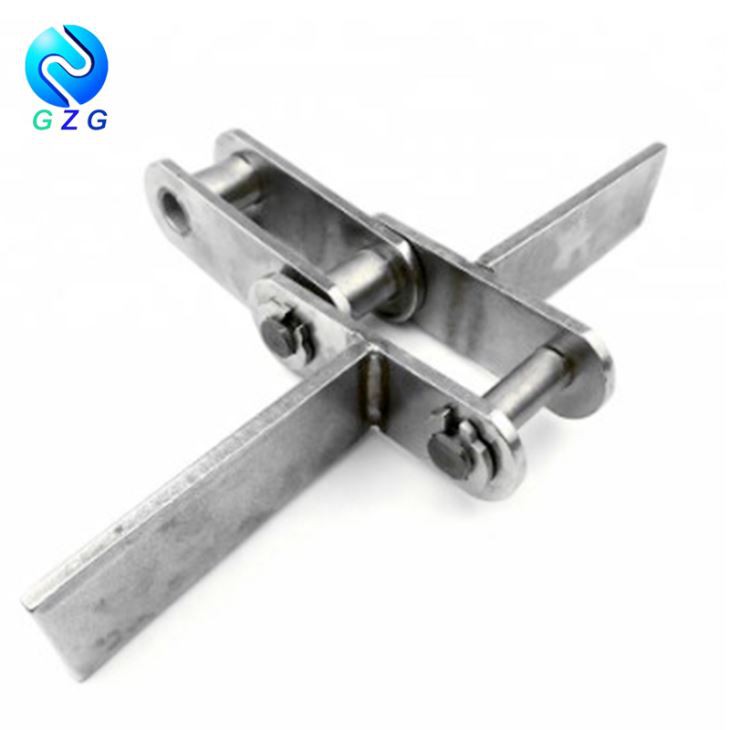
The Heavy Duty Bucket Elevator Chain is used in bucket elevators, which are widely used in the cement and mining industries to lift bulk materials. These chains need to be able to handle the continuous stress of lifting heavy loads at a certain speed. Standards for this type of chain might focus on factors like the fatigue resistance of the links, as they are constantly being flexed during operation.
Bucket Elevator Chain, on the other hand, is also used in elevator systems but may not need to handle as heavy loads as the heavy - duty version. The standards for this chain would be adjusted accordingly, considering its typical application and the expected loads.
Scraper Conveyor Chain is used in conveyor systems that use scrapers to move materials. This chain needs to be able to withstand the scraping forces and the abrasive nature of the materials being conveyed. Standards for this chain would emphasize factors like abrasion resistance and the ability to operate smoothly in a conveyor environment.
Another type of chain we offer is the NES Type High Speed Plate Hoisting Chain. This chain is designed for high - speed applications, so the standards for it would focus on things like the dynamic strength of the chain and its ability to operate at high speeds without excessive vibration or wear.
As a supplier, I stay up - to - date with all these standards to make sure that I can provide the best products for my customers. I work closely with manufacturers who understand the importance of meeting these international benchmarks. By doing so, I can offer reliable and high - quality chains that will perform well in various industrial applications.
If you're in the market for NE Hoisting Chain or any of our other industrial chains, I'd love to have a chat. Whether you're from a cement plant, a mining operation, or any other industry that needs reliable lifting and conveying solutions, I'm here to help. Contact me to discuss your specific requirements, and we can work together to find the perfect chain for your needs.
References:
EN 818 - European standard for chain slings made from generally - purpose steel chains
ISO 3077 - International standard for chain slings for general lifting purposes
ASTM A972 - Standard for overhead hoist chains in the United States