

The idler sprocket is a crucial component in many power transmission systems, especially those using chains. It serves to guide the chain, maintain proper tension, and sometimes change the direction of the chain's movement. One of the key factors that can significantly influence the performance of an idler sprocket is the number of teeth it has. As a trusted supplier of idler sprockets, I am well - versed in the intricacies of how tooth count impacts sprocket performance. In this blog, we will explore in detail how the number of teeth on an idler sprocket affects its operation and overall system performance.
1. Impact on Chain Engagement
The number of teeth on an idler sprocket directly affects how the chain engages with the sprocket. When a chain wraps around a sprocket, each tooth of the sprocket must fit precisely into the chain's pitch. A sprocket with a small number of teeth has a smaller pitch diameter. This means that the chain bends more sharply as it engages with the sprocket. The sharp bending can cause increased stress on the chain pins and bushings, leading to accelerated wear.
For example, in a system where an Idler Sprocket 40 Chain is used, if the idler sprocket has a very low tooth count, say 6 - 8 teeth, the chain will experience significant flexing forces. Over time, this can lead to elongation of the chain and eventually, chain failure. On the other hand, a sprocket with a larger number of teeth provides a more gradual bend for the chain. This reduces the stress on the chain components, extending the chain's service life. A sprocket with 15 - 20 teeth will offer a more gentle engagement with the chain, resulting in less wear and tear.
2. Speed and Torque Transmission
The tooth count of an idler sprocket also plays a role in speed and torque transmission. In a power transmission system, the speed ratio between the driving and driven sprockets is determined by their tooth counts. While an idler sprocket does not directly change the overall speed ratio between the main driving and driven sprockets, it can affect the smoothness of power transfer.
A sprocket with a small number of teeth rotates faster for a given chain speed. This can cause higher rotational inertia and more dynamic forces in the system. These forces can lead to vibrations and noise, especially at high speeds. For instance, in a high - speed conveyor system using an Idler Sprocket 50 Chain, a low - tooth - count idler sprocket may cause the chain to slap against the sprocket teeth, generating unwanted noise and potentially reducing the efficiency of the system.
Conversely, a sprocket with a larger number of teeth rotates more slowly for the same chain speed. This results in a smoother power transfer and reduced vibrations. In applications where precision and low noise are required, such as in some industrial automation systems, using an idler sprocket with a higher tooth count can improve the overall performance and reliability of the system.
3. Tension and Alignment
The number of teeth on an idler sprocket can influence chain tension and alignment. A sprocket with a small number of teeth may not provide sufficient contact area with the chain. This can lead to uneven tension distribution along the chain, causing some parts of the chain to experience higher loads than others. Uneven tension can result in premature chain wear and can also affect the alignment of the chain on the sprockets.
A sprocket with a larger number of teeth offers more contact points with the chain. This helps to distribute the tension more evenly along the chain, reducing the risk of localized wear. Moreover, the increased contact area provides better guidance for the chain, improving its alignment within the system. In systems where proper chain alignment is critical, such as in timing chain applications, using an Idler Sprocket with Bearing with an appropriate number of teeth is essential to ensure accurate and reliable operation.
4. Load - Carrying Capacity
The load - carrying capacity of an idler sprocket is closely related to the number of teeth. A sprocket with a small number of teeth has fewer teeth to share the load transmitted by the chain. As a result, each tooth experiences a higher load, which can lead to tooth breakage or excessive wear.

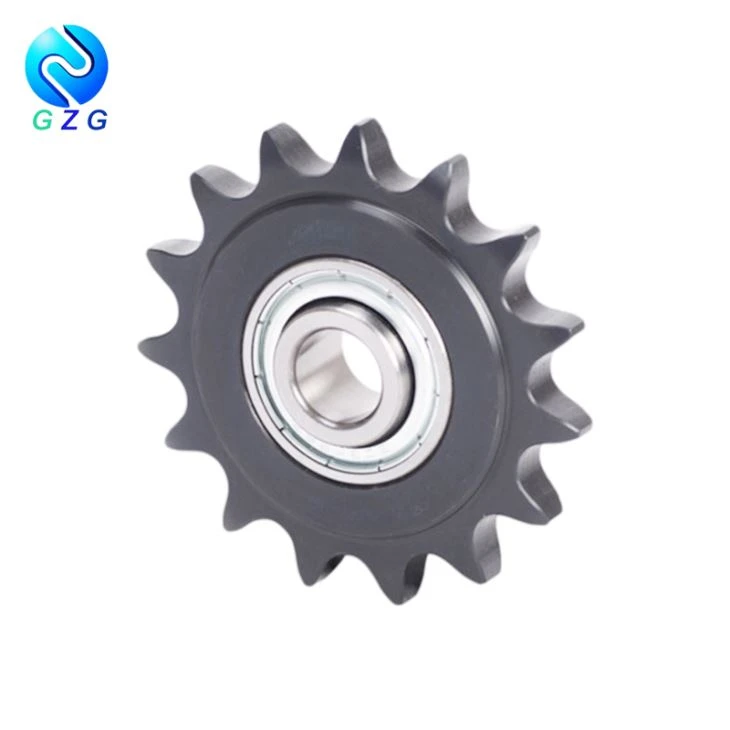
In contrast, a sprocket with a larger number of teeth distributes the load over a greater number of teeth. This reduces the stress on each individual tooth, increasing the overall load - carrying capacity of the sprocket. In heavy - duty applications, such as in mining or construction equipment, using an idler sprocket with a sufficient number of teeth is crucial to handle the high loads and ensure long - term durability.
5. Wear and Fatigue Resistance
Wear and fatigue are common issues in sprocket operation. The number of teeth on an idler sprocket can have a significant impact on its wear and fatigue resistance. As mentioned earlier, a sprocket with a small number of teeth causes the chain to bend more sharply, which increases the wear on the chain and the sprocket teeth. The high - stress concentration on the teeth can also lead to fatigue cracking over time.
A sprocket with a larger number of teeth reduces the bending stress on the chain and the sprocket teeth. This results in less wear and a lower risk of fatigue failure. Additionally, the more gradual engagement of the chain with a high - tooth - count sprocket helps to prevent the formation of stress risers on the teeth, further improving the sprocket's fatigue resistance.
Conclusion
In conclusion, the number of teeth on an idler sprocket has a profound impact on its performance in various aspects, including chain engagement, speed and torque transmission, tension and alignment, load - carrying capacity, and wear and fatigue resistance. As a supplier of high - quality idler sprockets, we understand the importance of selecting the right tooth count for different applications.
Whether you need an Idler Sprocket 40 Chain, an Idler Sprocket 50 Chain, or an Idler Sprocket with Bearing, we can provide you with the optimal solution based on your specific requirements. If you are looking for reliable idler sprockets and want to discuss your needs in detail, we encourage you to reach out to us for procurement and negotiation. We are committed to providing you with the best products and services to ensure the smooth operation of your power transmission systems.
References
- Juvinall, R. C., & Marshek, K. M. (2011). Fundamentals of Machine Component Design. Wiley.
- Norton, R. L. (2004). Machine Design: An Integrated Approach. Prentice Hall.
- Budynas, R. G., & Nisbett, J. K. (2011). Shigley's Mechanical Engineering Design. McGraw - Hill.