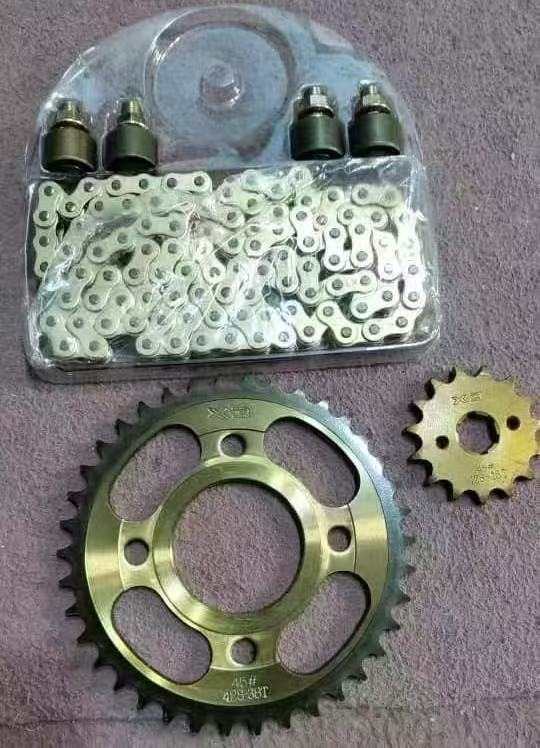
The 520 chain standard defines a pitch of 15.875 mm, while the "H" suffix means heavy construction with thicker link plates. A 520H sprocket must strictly follow this pitch to avoid accelerated wear, chain skipping or abnormal noise during operation.
C1045 medium carbon steel has become the mainstream choice for aftermarket sprockets. It balances machinability, surface hardness and impact resistance. After tooth quenching treatment, the tooth surface gains high wear resistance, while the core retains proper toughness to resist sudden impact loads from acceleration and rough terrain.
There are many bore configurations for 13T 520H front sprockets. Some versions adopt a plain bore with keyway and two fixing holes, while others use threaded holes for special engine hubs. Buyers should confirm bore diameter, keyway size and fixing hole layout before ordering. A small mismatch will lead to loose installation and early failure.
Many end users confuse 520 and 520H. Ordinary 520 suits light street bikes, whereas 520H fits higher torque scenarios. For bulk importers, stocking both versions helps cover different local market demands. At GZG Transmission, we keep standard drawings and can produce custom sprockets according to customer technical drawings.
https://www.gzg-transmission.com/driving-chain/motorcycle-chain-and-sprocket-kit-drive.html