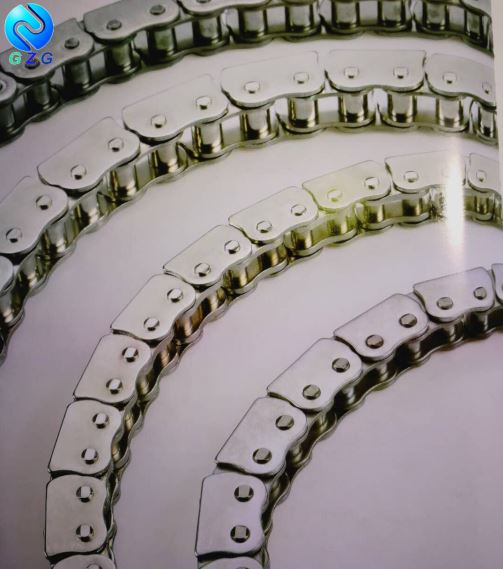
At first glance, stainless‑steel anti‑sidebow chains look similar to common stainless‑steel side‑bow roller chains. However, they are designed for the opposite function: instead of allowing lateral bending, they restrict side‑to‑side deflection under working load.
Manufacturers achieve this by optimizing the shape of link plates, controlling pin‑bushing clearance and keeping tighter assembly tolerances. This rigidity keeps the chain running straight when pushing or pulling the window frame on kiln cars, a typical setup in ceramic and brick production lines.
Standard side‑bow chains can bend sideways, which is good for curved tracks - but unsuitable when you need precise linear movement. If a regular side‑bow chain is used on pushing‑window devices, it may drift, vibrate or wear faster.
When sourcing, buyers should pay attention to material choice. SS304 or SS316 stainless steel is popular because kiln‑adjacent areas often have dust, humidity and occasional corrosive vapour. Also confirm working load, required length and whether custom attachments are needed.
As chain makers, we always remind customers: anti‑sidebow chain is not an interchangeable replacement for standard side‑bow chain. Check your equipment manual or provide drawings before placing an order.