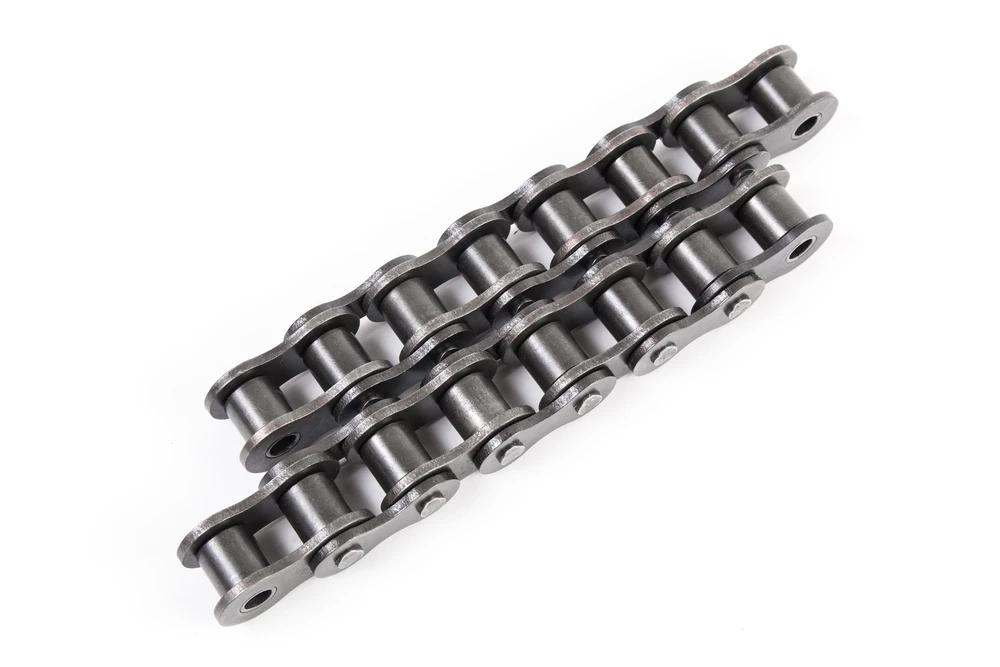
40A and 08B chains belong to two completely different standard systems. The 40A series follows ANSI American industrial standards, widely matched with American-standard automation equipment, logistics conveyors, packaging machines and general industrial transmission systems. In contrast, the 08B series complies with ISO European standards, commonly used for European mechanical equipment, agricultural machinery and light-duty transmission devices.
Even with identical pitch size, their core structural parameters differ significantly, including roller diameter, inner link clear width, plate thickness and pin length. These subtle dimensional gaps may not be visible visually, but they directly affect fitting tightness, meshing accuracy and overall running stability.
Many clients choose mixed installation to cope with urgent on-site maintenance or small-batch replacement. Under low speed and light load conditions, the equipment may run normally for a short period. However, after weeks of continuous operation, the mismatched chain will produce persistent vibration and friction. When 40A chain runs on a 08B sprocket, excessive clearance leads to loose meshing, causing severe tooth wear and chain elongation. If 08B chain is installed on ANSI 40A sprockets, the fit will be too tight, resulting in stiff rotation, increased motor load and accelerated fatigue damage.
In our daily export orders, we often receive inquiries about chain compatibility. We always remind customers not to judge chain suitability only by pitch size. The correct selection method is to confirm the original equipment standard, actual running speed, load capacity and working environment. For customers without accurate parameter documents, providing photos of old chains or on-site sprocket installation conditions is the most reliable way to confirm the correct model.
Standard matching between chain and sprocket greatly improves transmission efficiency, reduces daily maintenance frequency, and extends the overall service life of mechanical transmission parts. Stable matching also effectively avoids sudden production shutdown losses caused by improper accessory replacement.